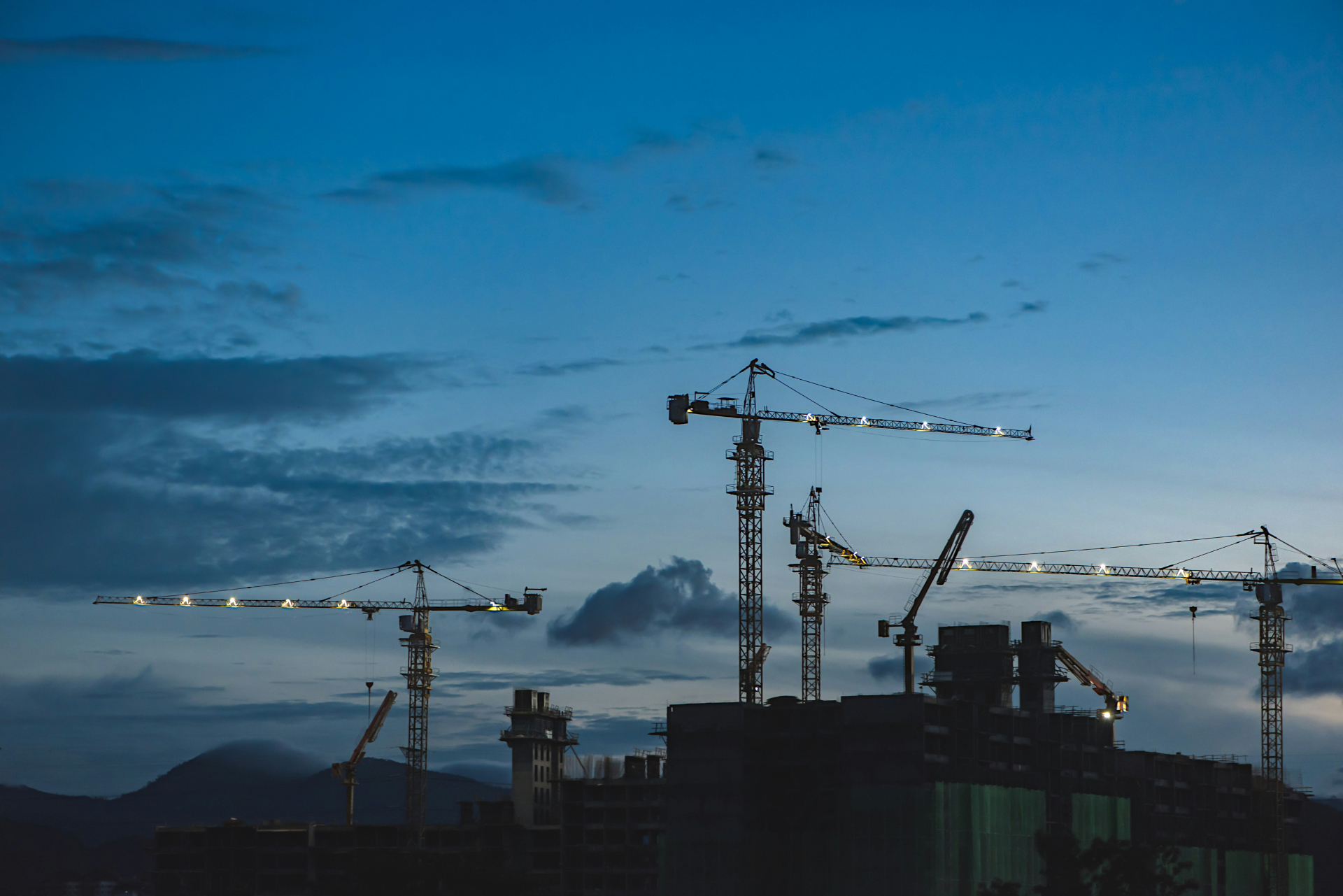
Builders Risk Claims
A building under construction isn't a building yet. That's the whole problem.
It has no certificate of occupancy. It may have no walls. Its value changes every week, materials arrive and sit in the open, subcontractors come and go, and half of what you've paid for is stacked on the ground under a tarp.
Standard property insurance isn't built for any of that, which is why builders risk exists. And because builders risk is a specialty form written for a temporary condition, it fails in ways owners and general contractors rarely see coming — usually at the worst possible moment, when a fire or a storm has already put the schedule underwater.
Where these claims break
The valuation basis
Builders risk is often written on a completed-value basis — the policy limit reflects what the finished project will be worth, not what exists today. Others are written on a reporting form, where coverage tracks the value in place and depends on you filing accurate reports. Get behind on those reports and a carrier has a coinsurance argument waiting. Which form you're on determines the shape of the entire claim, and a surprising number of insureds don't know.
Materials away from the job site
Steel at the fabricator. Millwork in a warehouse. A generator on a truck. Some builders risk forms cover these exposures, subject to declarations, endorsements, location, transit and reporting requirements. This is where large losses quietly go partially uncovered.
When coverage ends
Builders risk terminates on a trigger — completion, occupancy, acceptance, sometimes a date certain, whichever comes first. Projects that are substantially finished but not formally closed out sit in a gap between builders risk and the permanent property policy, and a loss in that window can find both carriers pointing at each other.
Faulty workmanship
Faulty-workmanship exclusions and any exceptions for ensuing damage differ by policy. Separate evidence about defective work from damage caused by a covered peril and obtain policy-specific advice as needed.
Soft costs: when the form actually provides coverage
A covered loss on a project doesn't just destroy work in place. It destroys the schedule. And a destroyed schedule costs money that has nothing to do with lumber.
When the insured purchased applicable soft-cost coverage, the documented delay may involve categories such as:
- Additional loan interest carried during the delay
- Extended financing and refinancing costs
- Re-inspection and re-permitting fees
- Additional architectural and engineering fees
- Extended general conditions — the supervision, trailers, fencing, and security you're paying for while nothing is being built
- Lost rents or lost income where the project's opening is pushed
Delay in completion or delay in start-up coverage, where it's carried, reaches further still.
These are documentable. They're also invisible unless someone goes looking, because they don't show up in a damage estimate — they show up in a financing statement.
Why speed matters more on a construction loss than almost anywhere else
Two clocks run at once.
The first is the evidence. On an active site, the scene changes immediately. Debris is cleared, work resumes, the failed component gets replaced and thrown away. What doesn't get documented in the first days often can't be documented at all.
The second is the money. Every day of delay compounds the soft costs — and those costs have to be tracked as they accrue, not reconstructed from memory six months later when the claim is finally taken seriously.
What we do
- Read the builders risk policy, the permanent property policy, and the contract documents together to establish who insures what, and when
- Determine your valuation basis and whether reporting requirements were met
- Document physical damage to work in place, materials on site, off site, and in transit
- Identify and quantify soft costs — financing, permits, design, extended general conditions, delay
- Address faulty workmanship exclusions where the carrier raises them, and test their scope against the actual policy language
- Present and negotiate the claim on your behalf
- Keep you informed at every stage